


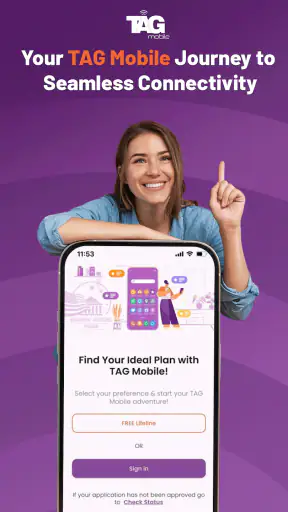
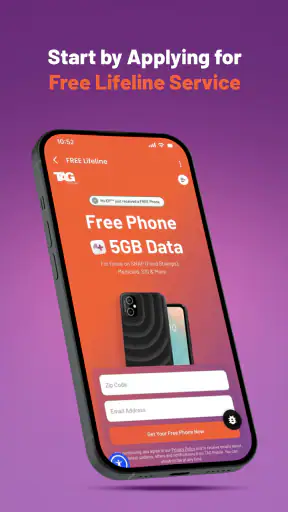

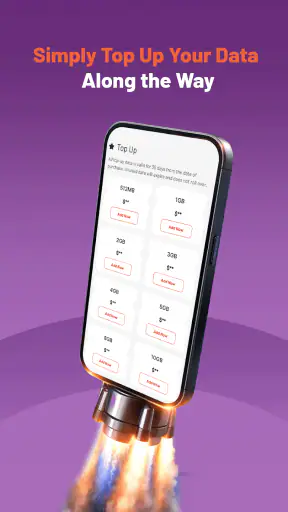
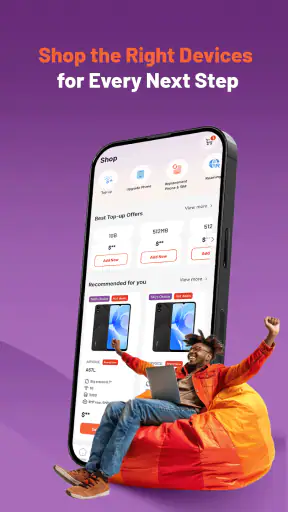
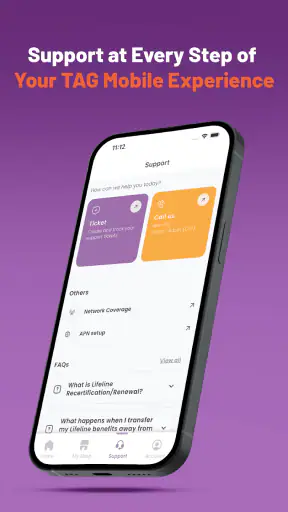


TAG Mobile is the kind of business app I would look at when the goal is to keep wireless service simple rather than turn phone management into another project. I spent time considering how it works for different users and situations, especially people who need clear navigation, low-friction account tasks, or a service they can check quickly while away from a desk. My overall impression is practical: it is a free wireless-service app from HTH Communications, and its strongest appeal is the direct relationship between the app and everyday mobile-account needs.
That simplicity matters more than it may sound. A wireless app is often opened when something is urgent: a connection needs checking, an account detail needs reviewing, or a user wants to understand what is happening with service. In those moments, clutter and unclear wording create real barriers. TAG Mobile presents itself as a business-focused tool for TAG wireless customers, not as a general productivity suite. That narrower purpose makes it easier to judge: it succeeds when it helps users handle mobile service without unnecessary steps, and it is less suitable for someone expecting a full office, messaging, or device-management platform.
How TAG Mobile feels to use across different needs
Readability and navigation come before extra features
My first test for an app like this is not how many screens it contains. I want to know whether I can understand where I am, what action is available, and what will happen after I tap. TAG Mobile benefits from having a focused role. Because it belongs to the Business category and is centered on wireless service, the app has a more understandable starting point than a broad business dashboard with unrelated tools competing for attention.
I also look at the wording from the perspective of someone who does not enjoy technical language. Wireless accounts can involve service status, usage, payments, plans, and device details, and these subjects are easy to make confusing. A good experience should separate those tasks instead of presenting one dense wall of information. In my view, TAG Mobile is most useful when I approach it with one specific question, such as checking an account detail or handling a service-related task, rather than browsing without a clear goal.
The current version is 1.6.5, which suggests the app has gone through ongoing refinement rather than being left as a one-off release. It first appeared on April 2, 2024, so it is still a relatively young product compared with long-established carrier applications. That is worth keeping in mind when judging the interface. A newer app can feel cleaner and less burdened by old design decisions, but it may also need time to cover every edge case that larger wireless platforms have accumulated over years.
For readers who prefer larger text, stronger contrast, or magnification, the practical question is whether the app remains understandable when the phone's own display settings are adjusted. I would not treat a clean default screen as proof of full accessibility. Instead, I recommend opening the main account areas with your preferred text size before relying on the app for important tasks. If labels become truncated, buttons move awkwardly, or information loses its hierarchy, the web account or help route may be easier for that particular user.
One useful habit is to decide what you need before opening the app and then stop once that task is complete. This reduces the amount of reading and navigation required, which helps users who tire easily, have attention difficulties, or simply want to avoid a long account session. It also makes it easier to notice an unexpected message or request rather than tapping through screens automatically.
Motor and sensory considerations in everyday account tasks
Wireless management is often performed one-handed, while standing, carrying a bag, or moving between places. That makes touch targets and confirmation steps important. I would be cautious about rushing through any account change on a small screen, particularly if a user has tremors, limited reach, or difficulty making precise taps. A short pause before confirming is sensible, because convenience should not come at the cost of selecting the wrong account action.
Users with motor limitations may prefer to complete the most demanding parts of an account task while seated with the phone supported, rather than trying to do everything during a commute. TAG Mobile can be useful for quick checks, but a more involved change may be more comfortable through a larger browser display or with assistance from a trusted person. That is not a criticism unique to this app; account interfaces in general can become tiring when they require repeated scrolling, typing, or confirmation.
Sensory access is equally situational. Someone with low vision may find a focused wireless app easier than a carrier portal filled with promotions and unrelated links, but that advantage depends on the actual screen layout and the phone settings being used. Someone sensitive to visual motion or crowded screens may appreciate a straightforward task path, while a user who depends on audio feedback should test whether every important control is announced clearly by their device's screen reader.
I would also avoid assuming that a visual status indicator is enough for every user. If an important account message is communicated mainly through color, a person with color-vision differences may need supporting text. When a service issue matters, reading the wording carefully is safer than interpreting an icon or color alone. TAG Mobile is best approached as a tool to verify information, not as something that should force a user to guess from visual signals.
For people who use alternative input methods, the best workflow is to prepare account information in advance and reduce unnecessary typing. Keep the phone stable, use the device's built-in voice or switch controls where appropriate, and review each field before submission. These steps are especially valuable when the app is being used under pressure, because an error in a wireless account can be more disruptive than an error in a casual app.
Situational access: when a focused wireless app helps most
A realistic example is a small-business owner who is leaving a customer visit and wants to check a wireless account detail before driving away. They may not have access to a laptop, may be working in bright outdoor light, and may have only a minute or two. A focused mobile interface is more convenient than signing into a full desktop portal. The owner can perform the check on the device already used for communication, then return attention to the day.
Another scenario involves a family member helping someone manage wireless service. The account holder may find small text or unfamiliar terminology difficult, while the helper can sit beside them and guide the process. The app's value in that situation is not that it removes every barrier; it is that both people can work from the same phone screen instead of passing around paperwork. I would still keep the account holder involved in every confirmation so that assistance does not become accidental control.
TAG Mobile may also suit users who travel between work locations and need a mobile-first way to stay aware of service matters. A wireless app is naturally available in places where a computer is not. However, situational access depends on the phone itself. A weak connection, low battery, glare, noise, or limited privacy can make an otherwise simple task difficult. For important changes, I prefer completing the action in a calm place and using the app on the move mainly for information checks.
The app is free, which removes one obvious barrier to trying it. It is marked for Everyone, so its positioning is broad rather than restricted to a narrow age group. TAG Mobile has passed one million installs and holds a 4.4 average from around 6,100 ratings, with roughly 1,200 written reviews. Those figures indicate that it has reached a substantial audience, but they should not replace personal testing: a rating cannot tell me whether the text size, navigation order, or confirmation flow works for my particular needs.
For a user who shares responsibility for a business phone, the app can be more useful when treated as part of a routine. Check account information at a planned time, note anything that needs follow-up, and avoid making several unrelated changes in one rushed session. This approach reduces cognitive load and creates a simple record in the user's own notes, which is helpful for anyone who finds it hard to remember what was changed and when.
Where the usual alternatives may be better
The closest alternative is usually a carrier website opened in a mobile browser. A website can be preferable when I need a wider layout, easier text selection, browser zoom, or a desktop keyboard. It may also be the better choice for a user who already has a reliable browser-based workflow and does not want another app on the phone. TAG Mobile's advantage is immediacy: a dedicated app can feel more direct than finding the correct account page through a browser.
A second alternative is contacting customer support. Support is the safer route when the issue is unusual, the account information appears inconsistent, or a user cannot confidently interpret the available options. An app should not replace human help when a mistake could interrupt service or affect another person on the account. I see TAG Mobile as a first stop for routine information and straightforward account work, not as a substitute for every support conversation.
Larger wireless providers may offer more extensive account ecosystems, including broader device controls, detailed usage tools, or more mature assistance features. I would choose one of those alternatives if I needed a highly developed self-service environment with many interconnected services. TAG Mobile is more appealing when I value a narrower purpose and do not want a large platform to manage.
There is also a privacy and concentration trade-off in using a dedicated account app. Keeping wireless tasks in one place can be convenient, but it means the user should be comfortable signing in and reviewing sensitive information on a personal device. I would avoid opening it on a shared phone or completing account work in a public place where the screen can be seen. Convenience is useful only when paired with sensible handling of account details.
Remaining barriers that affect the experience
The biggest limitation is not necessarily a missing feature; it is the gap between a simple interface and a genuinely inclusive one. A design can be easy for a confident smartphone user while still being difficult for someone with low vision, limited dexterity, reading challenges, hearing loss, or little experience with wireless terminology. I would like every important task to remain understandable through text, device accessibility settings, and a clear confirmation path. Users should test those basics instead of assuming the app will adapt perfectly.
Another barrier is context. A person may need to use the app while tired, distracted, in poor lighting, or under pressure because service is not behaving as expected. Those conditions expose weaknesses that are invisible during a relaxed trial. If a screen relies on subtle status changes, if an error message is vague, or if a completed action is not obvious, the user may not know whether to try again. My advice is to take a screenshot or note the message when something goes wrong, then seek support rather than repeating the same action.
People who need a completely hands-free experience should be especially careful. Mobile operating-system tools can help with voice control and screen reading, but the quality of that experience depends on how the app labels controls and presents changing information. I would not promise that every path will be comfortable without testing it. If hands-free operation is essential, the browser or direct support may offer a more dependable fallback.
Language and comprehension can create another practical obstacle. Wireless terms are familiar to industry users but not to everyone. A person helping an older relative, a new business owner, or someone using English as an additional language may need to explain each step in plain words. The app can support the task, but it cannot remove the need for understandable communication between the user and the person providing assistance.
Finally, a young app may continue changing as HTH Communications improves it. Updates can refine navigation, but they can also move controls that a user has learned to find. I recommend checking the first screen after an update instead of assuming the workflow is identical. For users who depend on a familiar sequence, a short review of the app after each change can prevent confusion.
My inclusive verdict on TAG Mobile
I would recommend TAG Mobile to TAG wireless customers who want a free, dedicated way to handle ordinary mobile-account needs from a phone. Its focused business purpose is its clearest strength, and the scale of its audience shows that it is not an obscure experiment. The developer, HTH Communications, has a product that feels most valuable when it removes the need to search through a larger wireless portal for a simple task.
I would recommend it with a practical qualification: accessibility is personal and situational. If you need large, highly adjustable text, reliable screen-reader behavior, hands-free control, or a spacious desktop layout, test the app with those requirements before making it your only option. Use the phone's accessibility settings, try a routine task, and confirm that important information is conveyed in words rather than color or icons alone.
For quick checks, planned account routines, and mobile-first use, TAG Mobile makes good sense. For complicated account problems, crowded environments, or users who struggle with touch interfaces, a browser on a larger screen or human support may be the better choice. I like the app because it aims at a real everyday need without pretending that one interface works equally well for everyone. My recommendation is to use TAG Mobile as a convenient first layer, while keeping a larger-screen or support-based fallback for tasks where clarity and confidence matter most.


